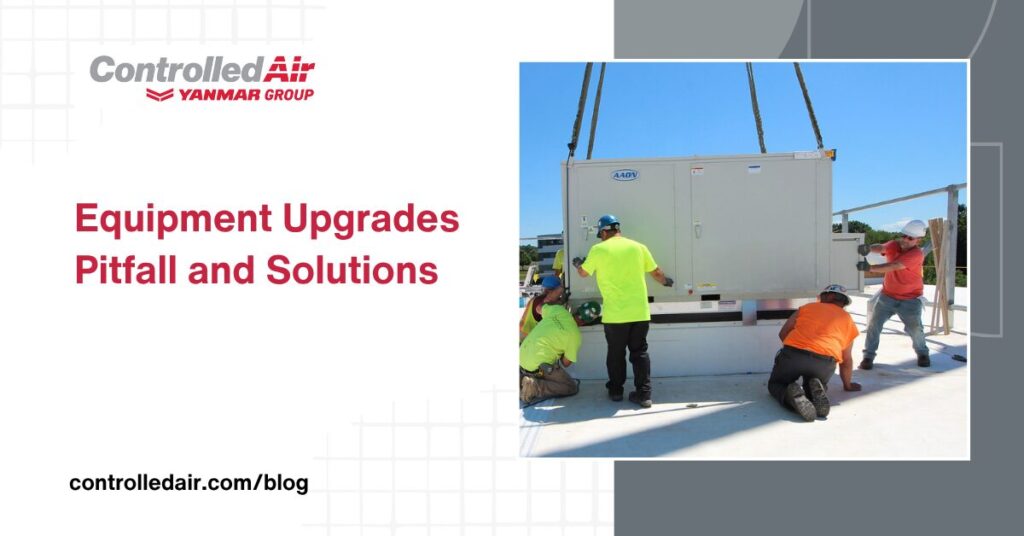
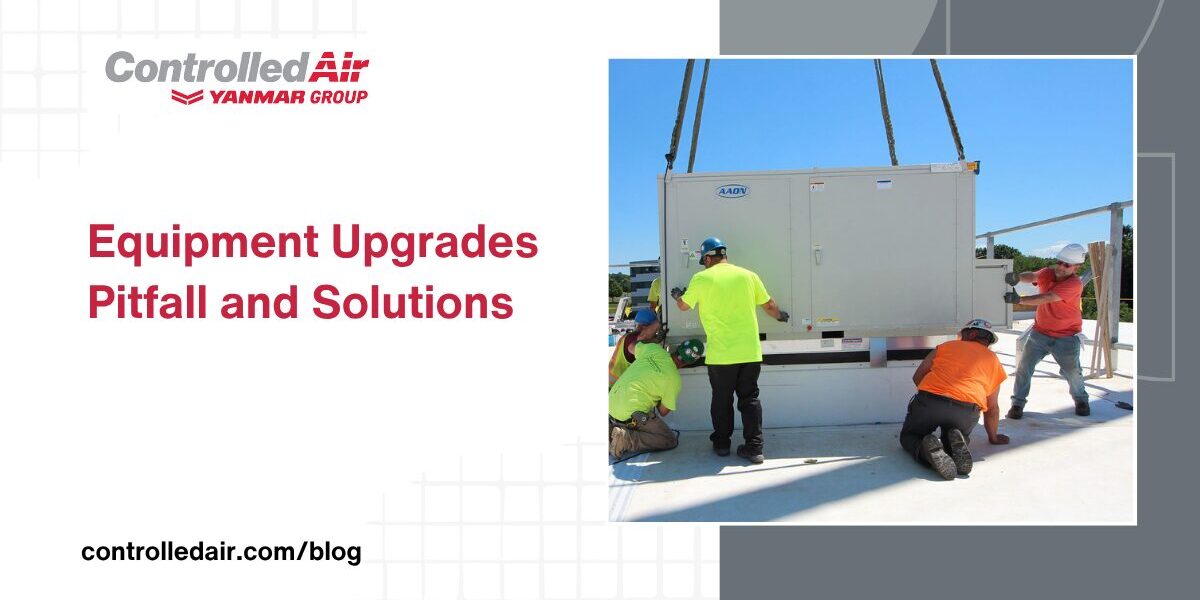
Equipment Upgrades Pitfall and Solutions
Building owners encounter numerous challenges when implementing advanced energy solutions like Combined Heat and Power (CHP), battery storage, or other Distributed Energy (DE) projects (solar, wind, Microgrids). Project success may be at risk if you partner with an inexperienced solutions provider, potentially impacting the long-term performance of the DE system. We have compiled a list of potential issues and solutions for you to consider before moving forward with a new energy-efficient CHP installation.
When selecting your energy solutions partner, ask them to provide guidance on these four essential factors for project delivery and success: legal, technical feasibility, financial soundness, and strict environmental compliance.
Below is a list of common problems and solutions.
COST:
Problem:
- Building owners sometimes fear they are not sufficiently knowledgeable to understand the technical impacts of system design and selection on promised ROI.
- Concerns that the project may end up costing the building owner more than planned.
- Confusion on the best financing options to secure desired outcomes.
- Uncertainty about the impacts of project administration on incentives and Renewable Energy Credits (RECs).
Solution:
- Carefully examine the project structure and understand the duties of each team member: contractor, consultant, or structured financing arm.
- Evaluate project ROI and IRR over the lifecycle of the system, including maintenance and overhaul costs.
- Allow the project to be technology-agnostic, and select equipment based on site-specific applications.
- Demand the team provide an energy model for the project with clearly called-out assumptions so that the proposed ROI is the delivered ROI.
- When packaging the project scope to include items outside the primary DE with an Energy Services Agreement (ESA) or Power Purchase Agreement (PPA), make sure the scope is clear and deliverables are concise.
- Ensure the terms of the ESA or PPA lock in savings over the lifecycle of the project, including planned maintenance, unplanned breakdowns, engine overhauls, and scheduled rebuilds. Make sure the agreement states which party is responsible for each.
Understanding operating costs are covered within your budget or Energy Service Agreement (ESA).
Issues Working with Utilities
Problem:
When working with utilities for Combined Heat and Power (CHP) installations, major challenges include potential revenue loss for the utility due to reduced electricity sales from the CHP system, complex interconnection procedures, concerns about grid stability impacts, difficulty in accurately forecasting CHP output, and the need for potentially significant infrastructure modifications to accommodate the new generation source. All of these can lead to increased costs and regulatory hurdles for project development. Integrating a CHP system into the grid requires detailed planning and coordination with the utility, including technical specifications, interconnection studies, and potentially upgrades to the local distribution network.
Solution:
- Be patient.
- Be prepared that it may take more time than anticipated for final utility acceptance.
- Understand that final utility witness tests may delay final commissioning of the project.
- Foster open communication between utilities and potential CHP developers to address concerns early in the project planning stage.
- Work with a provider that has a strong relationship with local utilities to keep the process smooth.
Failure to Meet Regulatory Compliance & Incentive Requirements
Problem:
- Missing efficiency targets disqualifies projects from rebates/incentives.
- Non-compliance with EPA emissions regulations for CHP leads to fines.
How We Prevent It:
- Work closely with utility programs to ensure eligibility for rebates.
- Use low-NOx catalysts for emissions control to meet environmental standards.
- Handle all permitting & interconnection approvals upfront.
Addressing the Challenges of Aging Building Systems:
Problem: Integrating CHP with existing infrastructure, including steam and hot water distribution systems, can be technically challenging, requiring specialized engineering expertise.
Recommended Actions:
- Analyze current energy consumption to identify potential inefficiencies.
- Make sure that CHP is the correct equipment for your current usage.
Improper Sizing & Load Calculation Errors or Incorrect Equipment
Problem: Incorrect equipment size leads to insufficient heating/cooling or power generation, or excessive cycling.
How We Prevent It:
- Conduct detailed load calculations using ASHRAE standards.
- Perform thermal and electrical demand analysis for CHP to match power output to actual site needs.
- Use real-world operating data and simulations before finalizing system size.
Poor System Integration & Controls Issues
Problem: Improper coordination between HVAC, CHP, and BMS (Building Management System) leads to inefficiencies or equipment conflicts.
How to Prevent It:
- Pre-engineer system design to ensure seamless HVAC-CHP integration.
- Implement smart controls that adjust system output based on real-time demand.
- Optimize building performance with a well-balanced control system that ensures seamless building-wide coverage. Failure to do so can lead to system conflicts and energy inefficiencies.
Incorrect Piping, Ductwork, and Ventilation
Problem:
- Incorrect duct sizing reduces airflow efficiency.
- Poor piping layout causes pressure losses in CHP heat recovery loops.
- Inadequate ventilation leads to overheating or backdrafting.
How We Prevent It:
- Use CFD modeling (Computational Fluid Dynamics) for airflow and thermal analysis.
- Use HAPP for proper load calculations and sizing of equipment to meet code and energy standards.
- Properly size and insulate hydronic piping to minimize energy losses.
- Ensure ventilation codes compliance (NFPA, ASHRAE, and local building codes).
Lack of Commissioning & System Testing
Problem:
- Systems are installed but not properly commissioned, leading to long-term inefficiencies.
- No validation of setpoints, alarms, or controls.
How We Prevent It:
- Full commissioning process with functional testing at each phase.
- Verify all safety interlocks, setpoints, and emergency shutdown procedures.
- Provide as-built documentation and operational training for facility staff.
Electrical Failures & Grid Synchronization Issues (for CHP)
Problem:
- Improper generator synchronization with the grid can cause power surges or system shutdowns.
- Poor-quality electrical connections lead to overheating or failures.
How We Prevent It:
- Use high-precision paralleling controls to match CHP output with grid requirements.
- Implement protective relays to prevent phase mismatches.
- Use infrared thermography for proactive fault detection during installation.
- Install the equipment per the manufacturer’s instructions and design.
Ignoring Maintenance & Serviceability
Problem:
- Missed maintenance overhauls.
- Lack of understanding regarding required maintenance for ensuring system lifecycle.
Solutions:
- Provide detailed O&M manuals and support.
- Follow manufacturer O&M schedules.
- Engage with experienced service providers who offer comprehensive maintenance agreements and monitoring. This ensures regular inspections, preventive maintenance, and prompt response to any service requests to maximize uptime.
Navigating energy projects, particularly CHP installations, requires careful consideration of costs, utility interactions, regulatory compliance, building system compatibility, and proper equipment sizing. By proactively addressing these potential challenges through thorough planning, expert partnerships, and adherence to established standards, organizations can mitigate risks, maximize efficiency, and ensure the successful implementation of their energy solutions.