Protecting Patients and Equipment: How Controlled Air Secured a Rhode Island Surgical Facility
Rhode Island winters bring crisp outdoor air, for medical facilities, low indoor humidity is more than a comfort issue, it can be a threat to regulatory compliance, sensitive electronics, and patient safety.
Controlled Air recently solved this seasonal challenge for a local medical service building. To prevent any disruption to patient care, our team coordinated all trades and performed the entire installation after hours. Here is a look at why precision humidity control matters, and how our design-build team executed the solution.
The Why: The Hidden Risks of Dry Air in Operating Rooms
Hospital operating rooms must meet strict environmental standards to remain compliant and safe. ASHRAE Standard 170 governs ventilation for healthcare facilities. It requires operating rooms to maintain relative humidity (RH) between 20% and 60%.
However, maintaining compliance requires looking closer at your medical gear. Most equipment manufacturers specify a narrower target range of 30% to 60% in their instructions for use. When humidity drops below this 30% threshold, risks escalate.
The primary threat is electrostatic discharge (ESD), or static electricity. Dry air allows static charges to build up on surfaces and clothing. A sudden static spark can cause sensitive electromedical devices to malfunction or fail during a procedure. Data from the FDA confirms that static discharge causes real-world equipment failures in surgical suites.
| Relative Humidity (RH) Level | Operational Risk |
| Below 60% | Upper compliance limit (mold and mildew risks rise above this point) |
| 30% to 60% | Ideal range recommended by most medical equipment manufacturers |
| Below 30% | Static electricity risks rise sharply; sterile supply integrity is compromised |
| Below 20% | Critically high static risk; potential damage to patient respiratory tracts |
The What: Precision Engineering and Smart Installation
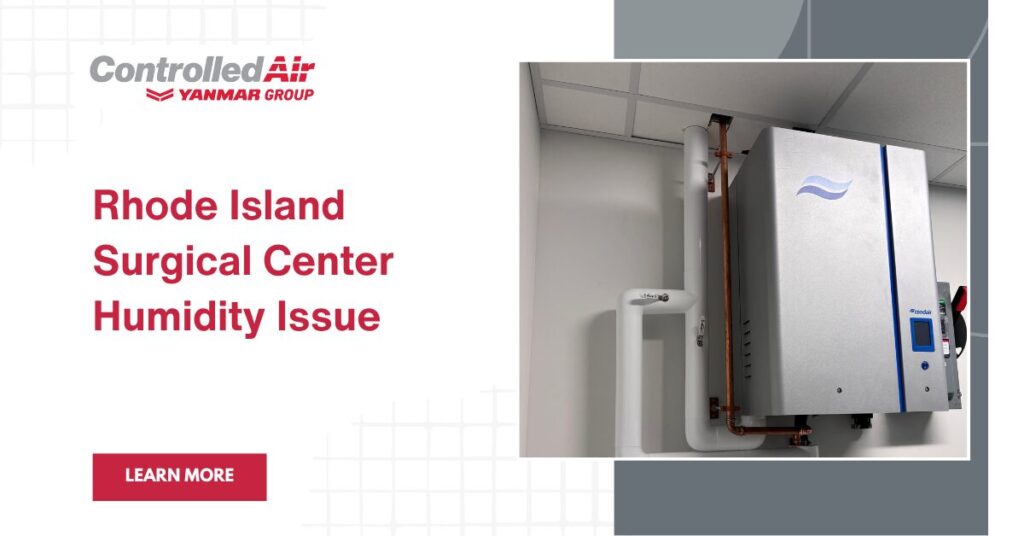
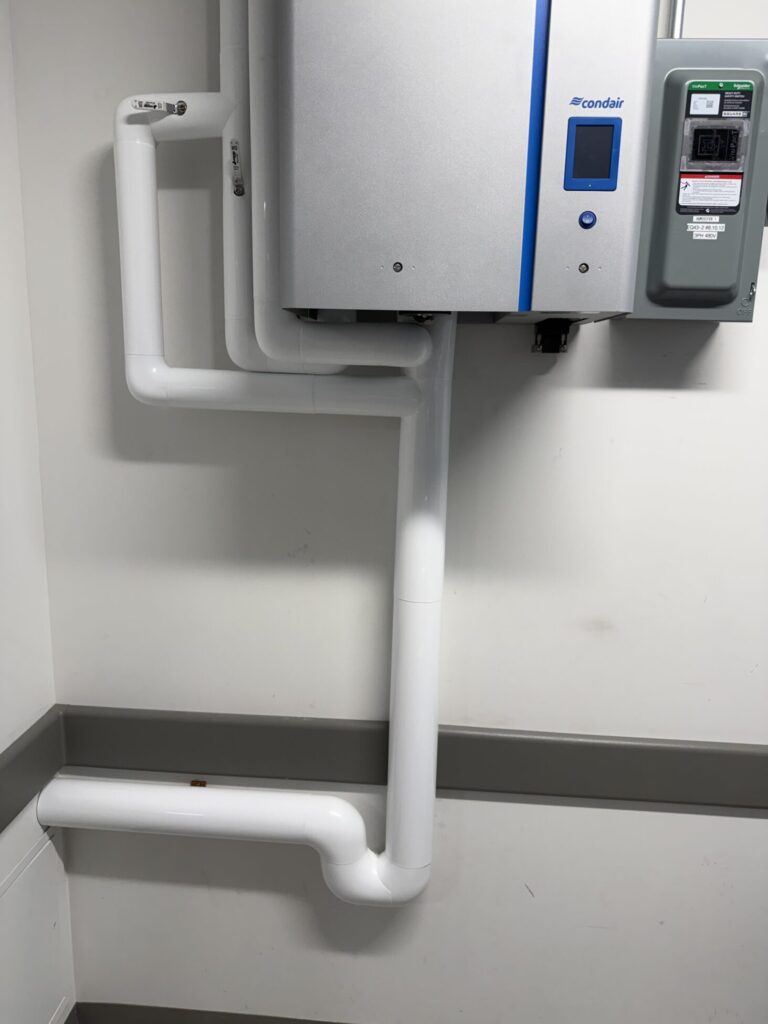
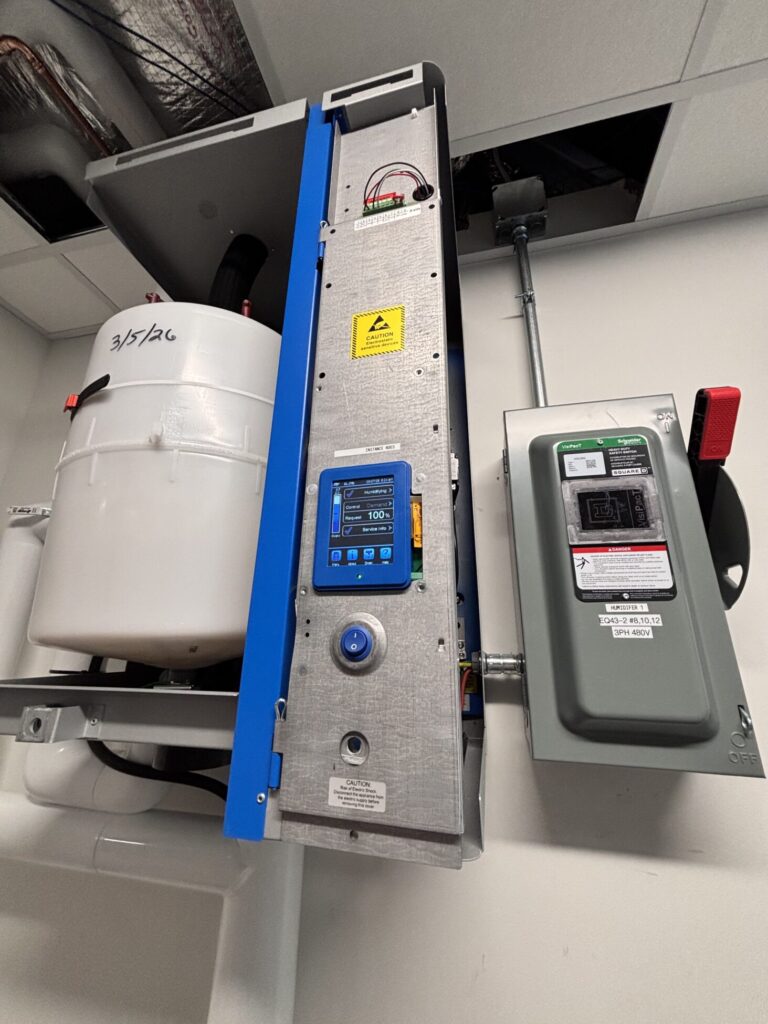
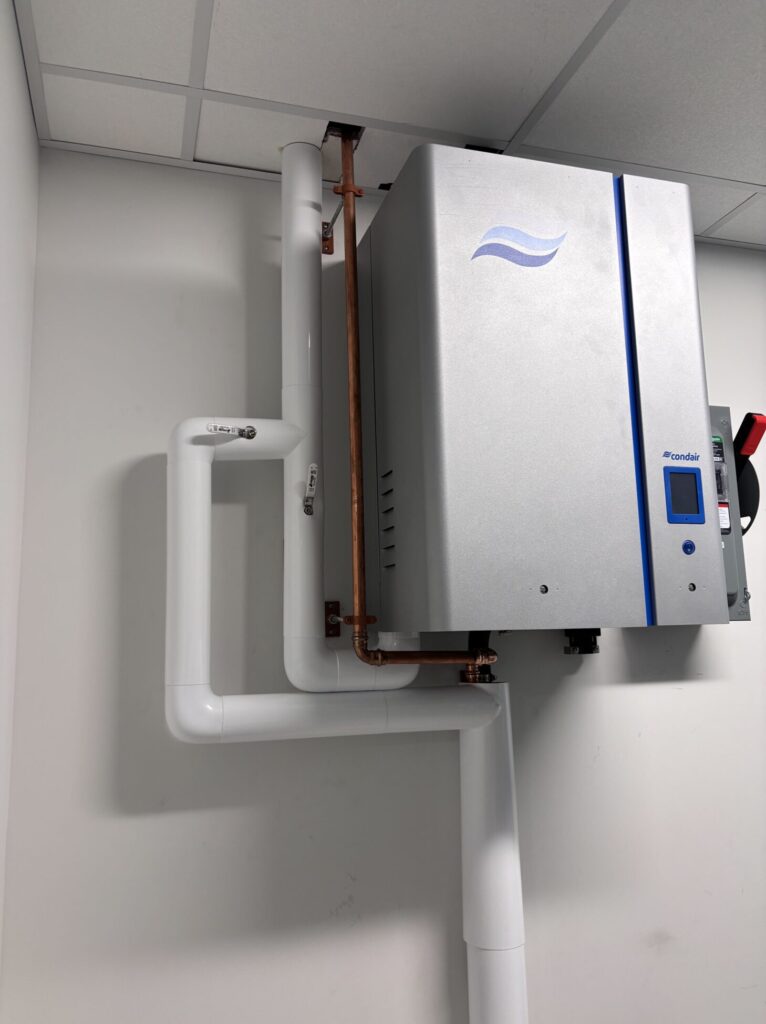
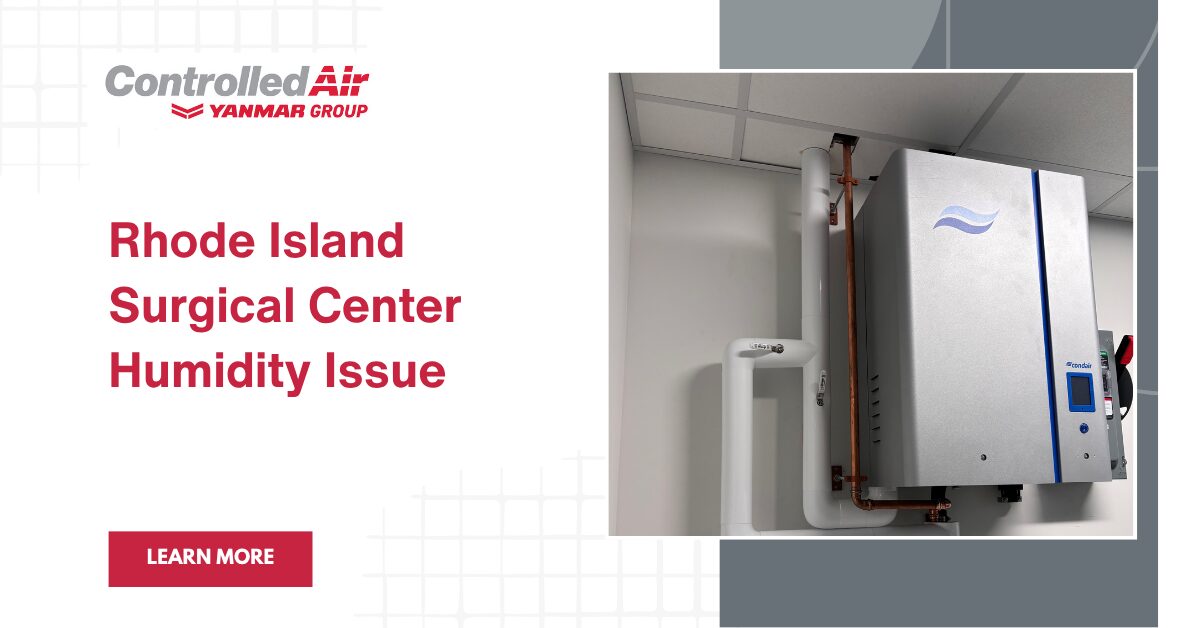
To stabilize the facility’s climate, Controlled Air furnished and installed two Nortec EL series steam humidifiers. We selected a 50-pound unit and a 75-pound unit to handle the building’s specific load requirements.
Our team mounted the units on the third floor below the ceiling, close to existing drainage access point. We placed the first unit on the Pre-OP inside corner wall and the second unit above the single handwash sink in the operating room corridor. A closet will be built around these units to keep them out of sight.
Key technical highlights of the installation include:
- High-Efficiency Piping: We ran steam piping from the humidifiers directly to the main rooftop unit (RTU) supply ducts. We wrapped all copper lines in high-grade insulation to reduce heat loss and lower energy waste.
- Rapid Absorption: We installed short absorption duct distributors. These components ensure that steam absorbs into the moving air stream instantly, preventing moisture from pooling inside the ductwork.
- System Protection: The Nortec units feature a built-in quench mechanism. This system cools excess steam condensate before it enters the building drainage lines, protecting your pipes from thermal damage.
- Safety Controls: We installed airflow switches, high-limit switches, and dedicated manufacturer humidity sensors within the operating rooms to guarantee precise, automated regulation.
- Smart Monitoring: We wired the controls for standalone operation, but the entire setup is ready for building automation system (BMS) integration. Our project partners at ABS are currently finalizing the digital BMS graphics for remote facility monitoring.
Low Maintenance, Long-Term Value
We choose equipment that protects your bottom line over time. The Nortec EL series features replaceable canisters. When the system requires service, technicians can swap the canisters out quickly. This design reduces maintenance hours and minimizes facility downtime.
Looking Ahead to Summer
Controlling a medical environment requires year-round vigilance. Now that we have secured the building against winter dryness, Controlled Air is preparing for the next seasonal shift. Our team is already designing the dehumidification strategy for this summer to ensure the facility stays compliant, dry, and efficient when the outdoor humidity spikes.